
dental bonding woodland hills

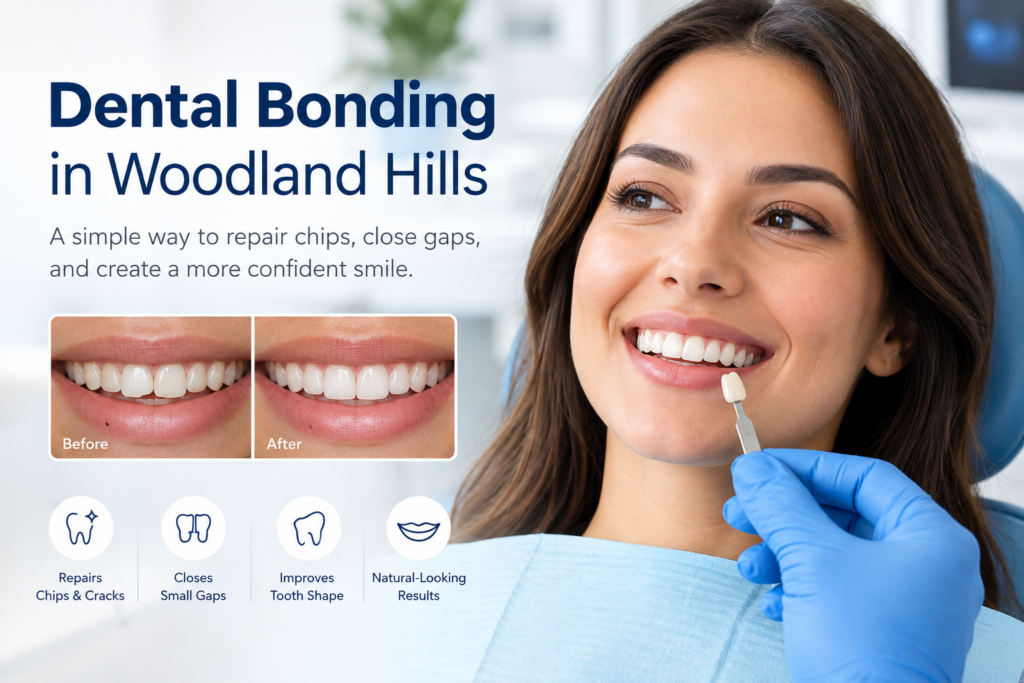
If you have chipped, cracked, discolored, uneven, or slightly misshapen teeth, you may not need extensive cosmetic dental treatment to improve your smile. Dental bonding in Woodland Hills, CA is a conservative cosmetic dental treatment that can correct many minor imperfections while preserving your natural tooth structure.

Dental bonding uses a tooth-colored composite resin that is carefully applied, shaped, hardened, and polished to improve the appearance of your teeth. In many cases, treatment can be completed in a single dental appointment.

What Is Dental Bonding?

Dental bonding, also called composite bonding, is a cosmetic dental procedure that uses tooth-colored composite resin to improve the shape, color, or appearance of a tooth.

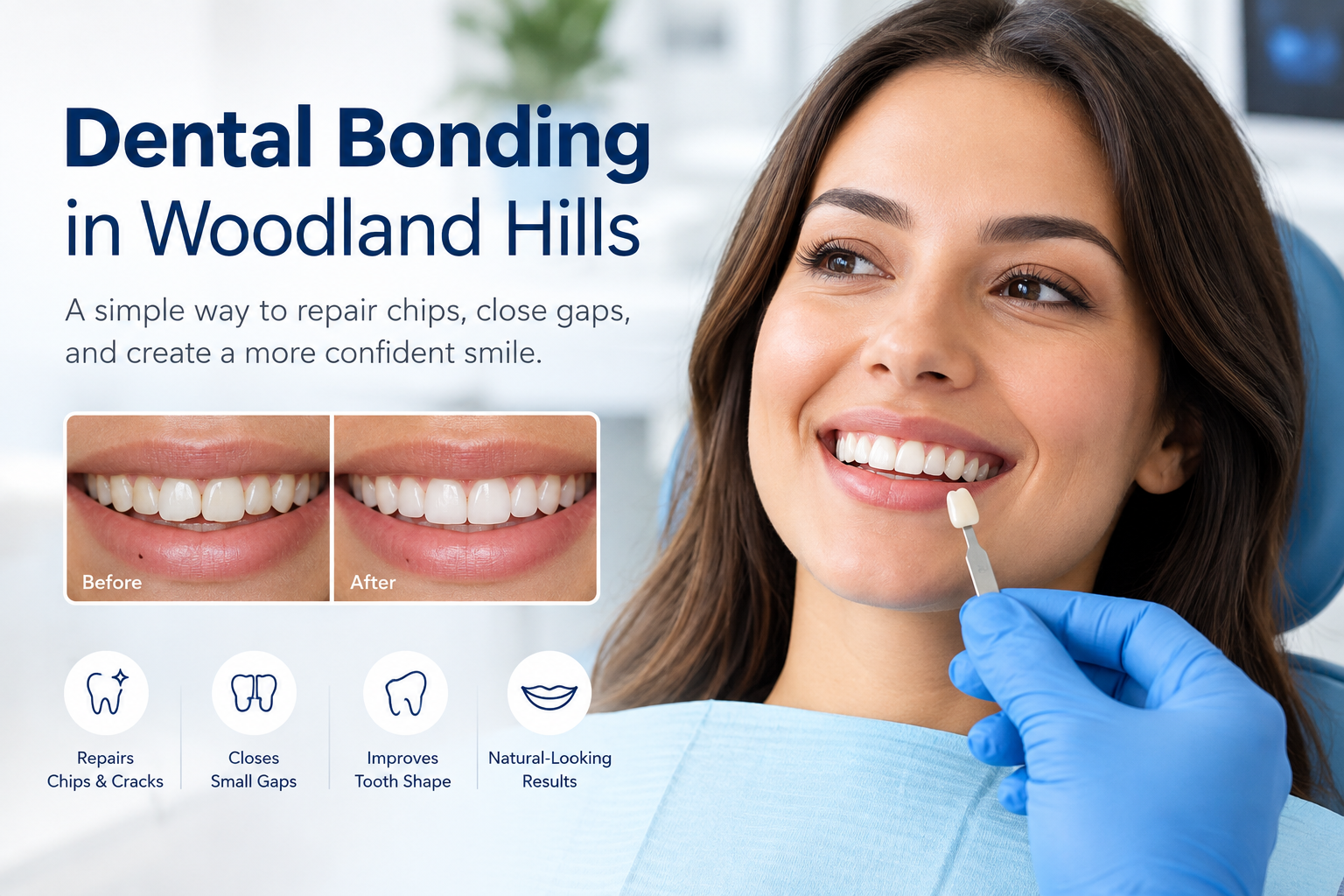
During treatment, your dentist selects a resin shade that closely matches your natural teeth. The material is then applied directly to the tooth and sculpted to achieve the desired shape. A special curing light hardens the resin before the dentist trims and polishes it for a natural-looking finish.

Because dental bonding generally requires minimal tooth preparation, it can be a more conservative option than treatments that require greater alteration of the natural tooth structure.
dental bonding woodland hills

What Can Dental Bonding Fix?

Dental bonding can address several minor cosmetic concerns. Your dentist may recommend bonding to:

  • Repair a chipped or fractured tooth
  • Improve the appearance of small cracks
  • Close small spaces or gaps between teeth
  • Reshape uneven or misshapen teeth
  • Improve the appearance of slightly worn teeth
  • Mask certain types of discoloration
  • Make teeth appear more symmetrical
  • Improve the overall appearance of your smile

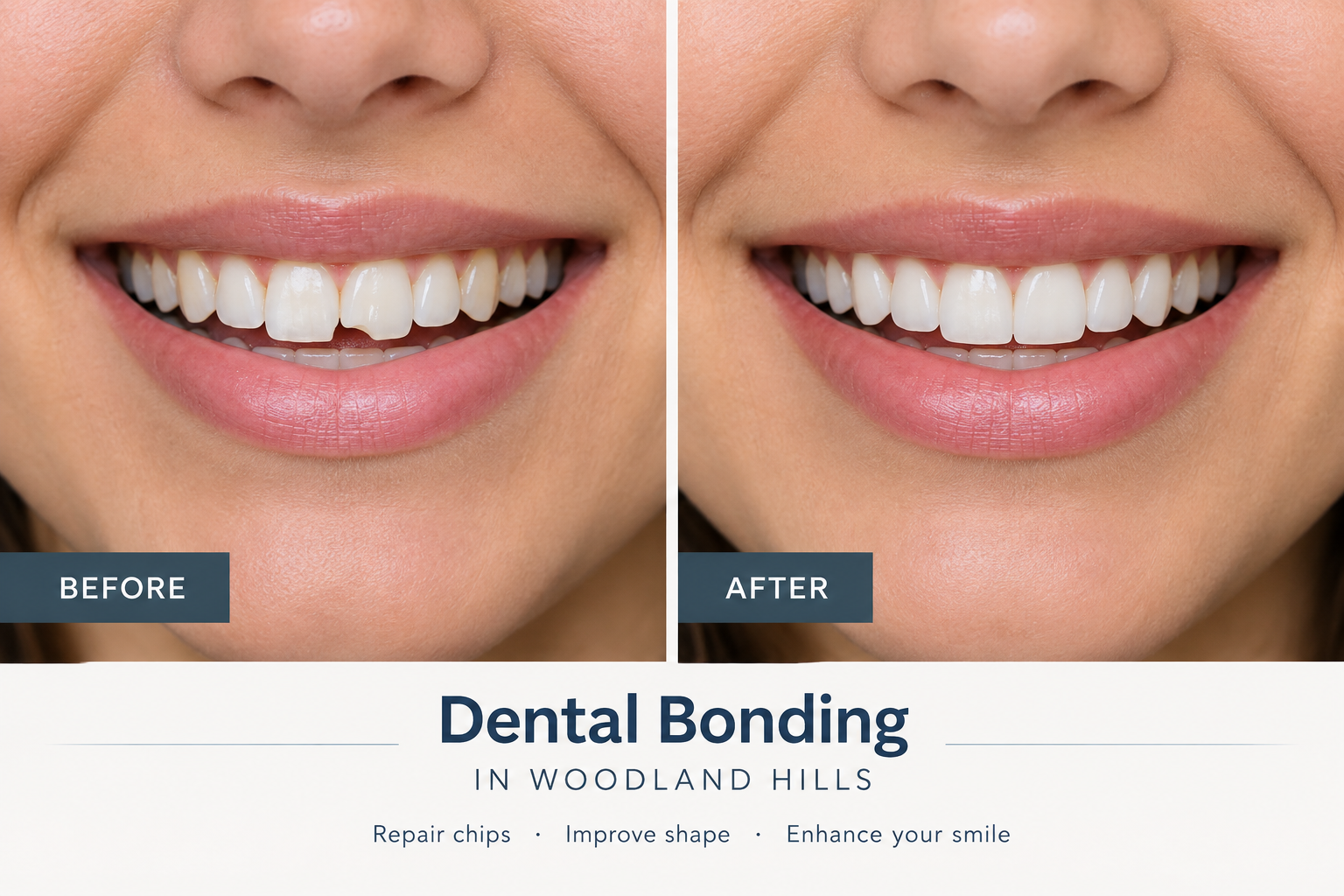
For example, if one of your front teeth is slightly shorter or has a small chip, composite resin can be added to restore its shape and create a more balanced appearance.

How Does Dental Bonding Work?

The dental bonding process begins with a dental examination to determine whether bonding is suitable for your tooth and your smile goals. Your dentist will assess the tooth and select a composite resin shade that closely matches your natural teeth. The tooth may then be lightly prepared to help the bonding material adhere securely. This preparation is typically minimal, making dental bonding a conservative cosmetic treatment compared with procedures that require more extensive tooth alteration.

Once the tooth is prepared, your dentist applies the tooth-colored composite resin directly to its surface and carefully shapes it to improve the tooth’s size, shape, or appearance. A special curing light is used to harden the material, after which the dentist trims and polishes the bonded area to create a smooth, comfortable, and natural-looking result. Depending on the number of teeth being treated and the extent of the changes, dental bonding can often be completed during a single appointment.

How Long Does Dental Bonding Take?

One of the advantages of cosmetic dental bonding is that treatment can often be completed in one appointment.

The exact treatment time depends on how many teeth are being treated and the type of changes required. Bonding a single chipped tooth may be relatively quick, while improving several teeth can take longer.

Your dentist can give you a more specific estimate after examining your teeth and discussing your goals.
Dental bonding woodladn hills

Is Dental Bonding Painful?

Dental bonding in woodland hills is generally considered a comfortable and minimally invasive cosmetic procedure. Since little or no tooth structure may need to be removed, many patients can complete treatment without extensive preparation.

If bonding is being used to treat a tooth affected by decay or another dental problem, your dentist may recommend additional treatment before or during the procedure.

Dental Bonding vs. Veneers

Dental bonding and veneers can both improve the appearance of teeth, but they are different treatments.

Bonding uses composite resin that is applied directly to the tooth. It is commonly used for smaller cosmetic changes, such as repairing chips, closing small gaps, or reshaping individual teeth.

Dental veneers are thin coverings placed over the front surfaces of teeth. They may be considered when a patient wants a more extensive cosmetic transformation involving tooth color, shape, size, or other concerns.

The right choice depends on factors such as the condition of your teeth, the extent of the cosmetic concern, your desired result, and your dentist’s recommendations.

How Long Does Composite Bonding Last?

The lifespan of dental bonding varies from person to person. Factors such as the location of the bonding, your bite, oral hygiene habits, diet, and whether you bite hard objects can affect how long the material remains in good condition.

Composite resin is not as strong as natural tooth enamel, so bonded areas can eventually become chipped, stained, or damaged.

Good oral hygiene and regular dental checkups can help you maintain your bonded teeth.

How to Care for Bonded Teeth

After dental bonding in Woodland Hills, taking care of your teeth is important for maintaining the appearance and condition of the composite resin.

Consider these habits:

  • Brush your teeth twice a day with fluoride toothpaste.
  • Floss daily around bonded teeth.
  • Visit your dentist regularly for examinations and cleanings.
  • Avoid biting directly into very hard objects.
  • Do not use your teeth to open packages or bottles.
  • Limit foods and drinks that can contribute to staining.
  • Contact your dentist if the bonded material becomes chipped or feels different.

Your dentist can also recommend specific care based on where the bonding was placed.

Is Dental Bonding Right for You?

Dental bonding can be an excellent option for patients who want to make relatively small improvements to their smiles without undergoing a more extensive cosmetic procedure.

However, bonding is not suitable for every dental concern. Significant tooth damage, extensive decay, severe discoloration, major changes in tooth position, or certain bite problems may require another treatment.

A dental examination is the best way to determine whether composite bonding is appropriate for you.

What Is the Cost of Dental Bonding in Woodland Hills?

The cost of dental bonding in Woodland Hills can vary depending on several factors, including:

  •  Number of teeth being treated
  • The amount of composite resin required
  • The complexity of the procedure
  • Whether additional dental treatment is necessary
  • The specific dental practice and materials used

Because every smile is different, it is best to schedule a consultation for an individualized estimate.

Why Choose Dental Bonding for Your Smile?

Dental bonding is a popular cosmetic dental treatment because it can improve the appearance of teeth while preserving much of their natural structure. The composite resin can be carefully matched to the shade of your surrounding teeth and shaped to complement your natural smile. This makes bonding a practical option for correcting minor imperfections such as small chips, uneven edges, gaps, or slightly misshapen teeth.

Another advantage of dental bonding is its convenience. Unlike some cosmetic dental treatments that may require multiple appointments or extensive preparation, many bonding procedures can be completed in a single visit. With proper care and regular dental checkups, bonded teeth can continue to provide a natural-looking improvement to your smile.

Schedule a Dental Bonding Consultation in Woodland Hills

If you are unhappy with a chipped, uneven, misshapen, or discolored tooth, dental bonding in Woodland Hills, CA may be a simple way to improve your smile.

A consultation allows your dentist to examine your teeth, understand your cosmetic goals, and determine whether composite bonding is the right treatment for you. Depending on your needs, your dentist may also discuss alternatives such as veneers, whitening, crowns, or other cosmetic treatments.

If you are ready to explore your options, contact a Woodland Hills cosmetic dentist to schedule an examination and learn more about dental bonding.

dental bonding woodland hills

If you have chipped, cracked, discolored, uneven, or slightly misshapen teeth, you may not need extensive cosmetic dental treatment to improve your smile. Dental bonding in Woodland Hills, CA is a conservative cosmetic dental treatment that can correct many minor imperfections while preserving your natural tooth structure.

Dental bonding uses a tooth-colored composite resin that is carefully applied, shaped, hardened, and polished to improve the appearance of your teeth. In many cases, treatment can be completed in a single dental appointment.

What Is Dental Bonding?

Dental bonding, also called composite bonding, is a cosmetic dental procedure that uses tooth-colored composite resin to improve the shape, color, or appearance of a tooth.

During treatment, your dentist selects a resin shade that closely matches your natural teeth. The material is then applied directly to the tooth and sculpted to achieve the desired shape. A special curing light hardens the resin before the dentist trims and polishes it for a natural-looking finish.

Because dental bonding generally requires minimal tooth preparation, it can be a more conservative option than treatments that require greater alteration of the natural tooth structure.

dental bonding woodland hills

What Can Dental Bonding Fix?

Dental bonding can address several minor cosmetic concerns. Your dentist may recommend bonding to:

  • Repair a chipped or fractured tooth
  • Improve the appearance of small cracks
  • Close small spaces or gaps between teeth
  • Reshape uneven or misshapen teeth
  • Improve the appearance of slightly worn teeth
  • Mask certain types of discoloration
  • Make teeth appear more symmetrical
  • Improve the overall appearance of your smile

For example, if one of your front teeth is slightly shorter or has a small chip, composite resin can be added to restore its shape and create a more balanced appearance.

How Does Dental Bonding Work?

The dental bonding process begins with a dental examination to determine whether bonding is suitable for your tooth and your smile goals. Your dentist will assess the tooth and select a composite resin shade that closely matches your natural teeth. The tooth may then be lightly prepared to help the bonding material adhere securely. This preparation is typically minimal, making dental bonding a conservative cosmetic treatment compared with procedures that require more extensive tooth alteration.

Once the tooth is prepared, your dentist applies the tooth-colored composite resin directly to its surface and carefully shapes it to improve the tooth’s size, shape, or appearance. A special curing light is used to harden the material, after which the dentist trims and polishes the bonded area to create a smooth, comfortable, and natural-looking result. Depending on the number of teeth being treated and the extent of the changes, dental bonding can often be completed during a single appointment.

How Long Does Dental Bonding Take?

One of the advantages of cosmetic dental bonding is that treatment can often be completed in one appointment.

The exact treatment time depends on how many teeth are being treated and the type of changes required. Bonding a single chipped tooth may be relatively quick, while improving several teeth can take longer.

Your dentist can give you a more specific estimate after examining your teeth and discussing your goals.

Dental bonding woodladn hills

Is Dental Bonding Painful?

Dental bonding in woodland hills is generally considered a comfortable and minimally invasive cosmetic procedure. Since little or no tooth structure may need to be removed, many patients can complete treatment without extensive preparation.

If bonding is being used to treat a tooth affected by decay or another dental problem, your dentist may recommend additional treatment before or during the procedure.

Dental Bonding vs. Veneers

Dental bonding and veneers can both improve the appearance of teeth, but they are different treatments.

Bonding uses composite resin that is applied directly to the tooth. It is commonly used for smaller cosmetic changes, such as repairing chips, closing small gaps, or reshaping individual teeth.

Dental veneers are thin coverings placed over the front surfaces of teeth. They may be considered when a patient wants a more extensive cosmetic transformation involving tooth color, shape, size, or other concerns.

The right choice depends on factors such as the condition of your teeth, the extent of the cosmetic concern, your desired result, and your dentist’s recommendations.

How Long Does Composite Bonding Last?

The lifespan of dental bonding varies from person to person. Factors such as the location of the bonding, your bite, oral hygiene habits, diet, and whether you bite hard objects can affect how long the material remains in good condition.

Composite resin is not as strong as natural tooth enamel, so bonded areas can eventually become chipped, stained, or damaged.

Good oral hygiene and regular dental checkups can help you maintain your bonded teeth.

How to Care for Bonded Teeth

After dental bonding in Woodland Hills, taking care of your teeth is important for maintaining the appearance and condition of the composite resin.

Consider these habits:

  • Brush your teeth twice a day with fluoride toothpaste.
  • Floss daily around bonded teeth.
  • Visit your dentist regularly for examinations and cleanings.
  • Avoid biting directly into very hard objects.
  • Do not use your teeth to open packages or bottles.
  • Limit foods and drinks that can contribute to staining.
  • Contact your dentist if the bonded material becomes chipped or feels different.

Your dentist can also recommend specific care based on where the bonding was placed.

Is Dental Bonding Right for You?

Dental bonding can be an excellent option for patients who want to make relatively small improvements to their smiles without undergoing a more extensive cosmetic procedure.

However, bonding is not suitable for every dental concern. Significant tooth damage, extensive decay, severe discoloration, major changes in tooth position, or certain bite problems may require another treatment.

A dental examination is the best way to determine whether composite bonding is appropriate for you.

What Is the Cost of Dental Bonding in Woodland Hills?

The cost of dental bonding in Woodland Hills can vary depending on several factors, including:

  •  Number of teeth being treated
  • The amount of composite resin required
  • The complexity of the procedure
  • Whether additional dental treatment is necessary
  • The specific dental practice and materials used

Because every smile is different, it is best to schedule a consultation for an individualized estimate.

Why Choose Dental Bonding for Your Smile?

Dental bonding is a popular cosmetic dental treatment because it can improve the appearance of teeth while preserving much of their natural structure. The composite resin can be carefully matched to the shade of your surrounding teeth and shaped to complement your natural smile. This makes bonding a practical option for correcting minor imperfections such as small chips, uneven edges, gaps, or slightly misshapen teeth.

Another advantage of dental bonding is its convenience. Unlike some cosmetic dental treatments that may require multiple appointments or extensive preparation, many bonding procedures can be completed in a single visit. With proper care and regular dental checkups, bonded teeth can continue to provide a natural-looking improvement to your smile.

Schedule a Dental Bonding Consultation in Woodland Hills

If you are unhappy with a chipped, uneven, misshapen, or discolored tooth, dental bonding in Woodland Hills, CA may be a simple way to improve your smile.

A consultation allows your dentist to examine your teeth, understand your cosmetic goals, and determine whether composite bonding is the right treatment for you. Depending on your needs, your dentist may also discuss alternatives such as veneers, whitening, crowns, or other cosmetic treatments.

If you are ready to explore your options, contact a Woodland Hills cosmetic dentist to schedule an examination and learn more about dental bonding.